Myanmar's Opium Surge: A Growing Crisis Amid Economic Turmoil
Myanmar sees opium cultivation at a decade high amid conflict and economic woes, raising global narcotics challenges.

Unprecedented Growth Amid Strife
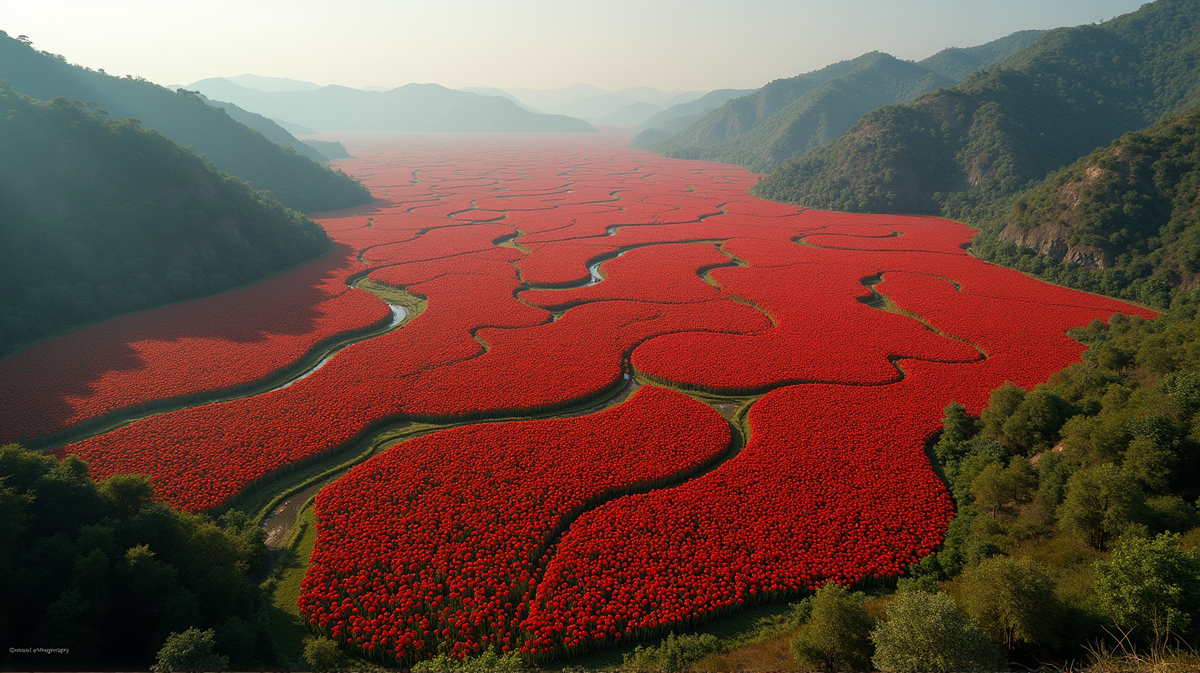
Myanmar has reached a concerning milestone as opium poppy cultivation hits a ten-year high, a predicament fueled by ongoing conflict and economic instability. The United Nations has reported that poppy fields in Myanmar expanded by 17% within a year, accentuating the nation’s pivot towards the illicit economy. According to UN News, this substantial growth marks the most significant increase since 2020, as desperate farmers seek refuge in this lucrative yet illegal trade.
Critical Regions Under Siege
Notably, the eastern Shan state and the Chin state have witnessed pronounced growth in opium cultivation, increasing by 32% and 26% respectively. These regions suffer from severe state neglect, weak governance, and continuous armed conflicts, making them hotspots for opium farming. South Shan state remains the nucleus of Myanmar’s opium operations, housing 44% of the nation’s poppy cultivation, making it a persistent challenge for drug control authorities.
Shift Towards Western Borders
In a worrying development, new cultivation has been identified in the conflict-ridden Sagaing region, hinting at a strategic migration of cultivation activities towards Myanmar’s volatile western frontier. Despite a significant drop in Afghanistan’s opium farming, Myanmar’s escalating production propels it as the leading global source of this illicit commodity.
Economy of Survival
Even as yields dip due to harsh conditions and supply chain hiccups, opium prices have soared, thereby entrenching this crop as a lifeline for impoverished farmers. With the average price of dry opium skyrocketing to \(365 per kilogram, the opium trade remains a critical economic crutch for farmers, generating substantial revenues that range between \)300 million and $487 million.
Beyond Myanmar: The Heroin Market
Myanmar’s increasing role as a primary heroin supplier is redefining global narcotics trafficking routes, previously dominated by Afghanistan. European institutions have intercepted multiple heroin shipments traced back to Myanmar, revealing the drug’s widening reach. Synthetic drug production, including methamphetamine and ketamine, further complicates the region’s illicit drug dynamics.
Calls for Urgent Intervention
Delphine Schantz of UNODC underscores the dire need for effective intervention to mitigate the drug crisis spawned by Myanmar’s turmoil. “The international community must act swiftly,” she stated, emphasizing that Myanmar’s drug landscape is set to influence global narcotics markets significantly unless alternative, sustainable livelihoods are provided to opium-dependent farmers.