Unveiling Global Inequality: Where Wealth and Income Divide Us the Most
Explore the stark global disparity in wealth and income distribution, where a tiny elite holds sway over vast resources, leaving billions with crumbs.

In an age where the richest 10 percent control the lion’s share of the world’s wealth, the disparity between what people own and earn is more jarring than ever. According to the World Inequality Report 2026, those at the top possess over three-quarters of the personal wealth and enjoy nearly all global income, rendering stark divides and raising questions about the sustainability of such concentration. As stated in Al Jazeera, understanding these insights is crucial as we confront the future of our shared economic landscape.
Wealth vs. Income: Different Faces of Inequality
The journey into inequality begins with understanding the nuances between wealth and income. Wealth encapsulates what one owns—assets, savings, properties—less any debts. Income, on the other hand, is the flow of money received through wages or earnings. The paradox lies in how those thriving in wealth aren’t always the top earners, yet they wield escalating financial clout. In 2025, fewer than 60,000 individuals held thrice the wealth of half the world’s populace. Such statistics point to a troubling expansion of wealth concentration, leaving billions grappling for economic stability.
Regional Reflections of Wealth and Income
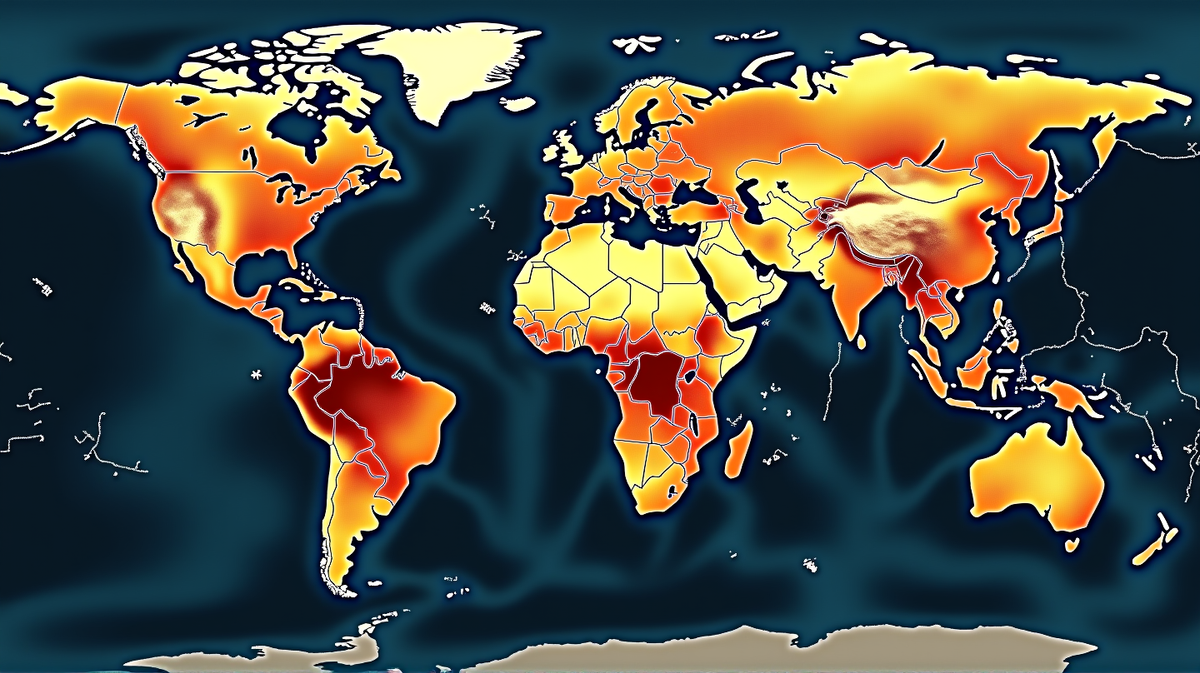
Globally, inequality manifests differently across continents. Regions like North America and Oceania lead in wealth and income ratings, eclipsing the world average significantly. Meanwhile, vast stretches of sub-Saharan Africa, Latin America, and parts of Asia linger under the specter of financial disenfranchisement. Geography, a birthright variation beyond an individual’s control, plays an undeniable role in determining economic outcomes. Within these ecosystems, nations display a kaleidoscope of distribution scores, from somewhat balanced to severely skewed.
The Chronicles of Income Imbalance
When examining income variables, South Africa emerges as a frontrunner in inequality, with the top earners consuming a significant portion of resources, reminiscent of patterns seen in Brazil and Mexico. Conversely, European stalwarts like Sweden and Norway showcase a more equitable landscape where income spreads more evenly across socioeconomic tiers. Similarly, diverse profiles emerge within Asia, where Bangladesh and China stand in contrast to income-heavyweight holders such as India and Thailand.
Wealth: The Invisible Handcraft of Power
Inequality’s more opaque design lies hidden within wealth. Here, South Africa strikes again, with the top echelons hoarding most resources, leaving some with negative net worth. Between Russia’s wealth grabs and Brazil’s soaring inequality, patterns crystallize that, whether in developed continents or emerging nations, wealth remains concentrated. Even the economic giants like the U.S. and the U.K. struggle against these tides, as power settles with a small portion of the population.
By pulling back the curtains on these disparities, we hope to ignite conversations and policy considerations aimed at addressing and rebalancing global wealth inequalities. Understanding these dynamics is a pivotal step toward a future where prosperity isn’t just a privilege for the few but a promise for the many.